The 2026 Dog Wellness Reset: A 5-Minute Head-to-Tail Check-in
January is usually the time we look at our own habits, but it’s also a great point in the year to check in on our dogs. Since they can’t tell us when they feel a bit "off," they use their bodies and their behaviour to send us signals instead.
This is a simple way to get hands-on and see how they are really doing.
Note: If you spot anything that doesn't feel right or you are concerned about a change, it is always best to book a quick check-in with your vet.
1. Their Gut, Teeth and Gums
Digestive health is the foundation of their overall wellbeing.
- Their Poo: You’re looking for firm, consistent stools that are easy to pick up. If they start firm in the morning but get softer as the day goes on, it might be a sign their system is working a bit too hard.
- Their Rhythm: How often are they going? There is no "perfect" number, but a frequency that is normal for them is a great sign of a stable transit time.
- Signs to Watch: Keep an eye out for excessive grass-eating, lots of wind, or vomiting yellow bile in the early hours. These can be simple hints that their current food isn't sitting quite right.
- Their Teeth and Gums: Gently lift their lip. Gums should be a healthy pink, not red or bleeding. If their breath is particularly strong or you notice heavy plaque build-up, it’s worth noting, as oral health impacts the rest of the body.
2. Their Coat and Skin
The skin is often a mirror of what is happening inside.
- Their Glow: A healthy coat should be soft and have a natural shine. If it’s feeling brittle, dull, or "dusty," they might need a boost in their healthy fats.
- Their Colour and Texture: Look for a consistent coat colour. Pinkish or brown staining on the paws or around the mouth can often be a sign of yeast or environmental sensitivities.
- The "Swirl" Test: Keep an eye out for any new "cowlicks" or changes in the direction of the hair. Sometimes, the coat can change texture or "stand up" over an area where a dog is feeling some discomfort or tension.
3. Their Body and Mobility
Keeping a dog lean is one of the most effective ways to support their longevity.
- Their Weight: Keep an eye on any rapid changes. If their weight has crept up or dropped off suddenly without a change in their exercise or food, it's worth a professional check-up.
- Their Hydration: Take note if they seem more thirsty than usual or if you’re filling the water bowl more often.
- Their Plan: Now is a good time to ensure you have a clear plan in place for their flea, worming, and vaccination needs that fits your lifestyle.
4. Their Energy and Communication
Behavioural changes are often how our dogs tell us they aren't feeling 100%.
- Their Vitality: Does your dog have the right energy levels for their age? If they’ve become suddenly "grumpy" or seem to have a shorter fuse than usual, it’s often a sign of hidden discomfort rather than just a personality change or "getting old."
- Their Rest: A comfortable dog should be able to settle and sleep deeply. Constant pacing or an inability to get comfortable can be a sign of digestive or joint unrest.
5. Their Vital Signs
- Their Ribs: You should be able to feel their ribs easily. A good guide is to feel your own knuckles while your hand is flat—that’s how a dog’s ribs should feel. If you have to press through a thick layer to find them, they may be carrying a little extra weight.
- Their Waist: When looking from above, you want to see a clear "tuck" behind the ribs.
- Their Movement: Watch how they move after a long sleep. Do they get up with ease, or is there a bit of stiffness? If they are hesitating before jumping into the car or onto the sofa, they may be telling you their joints need a bit of extra support.
Time for your dog to be Made Different.
Excellent
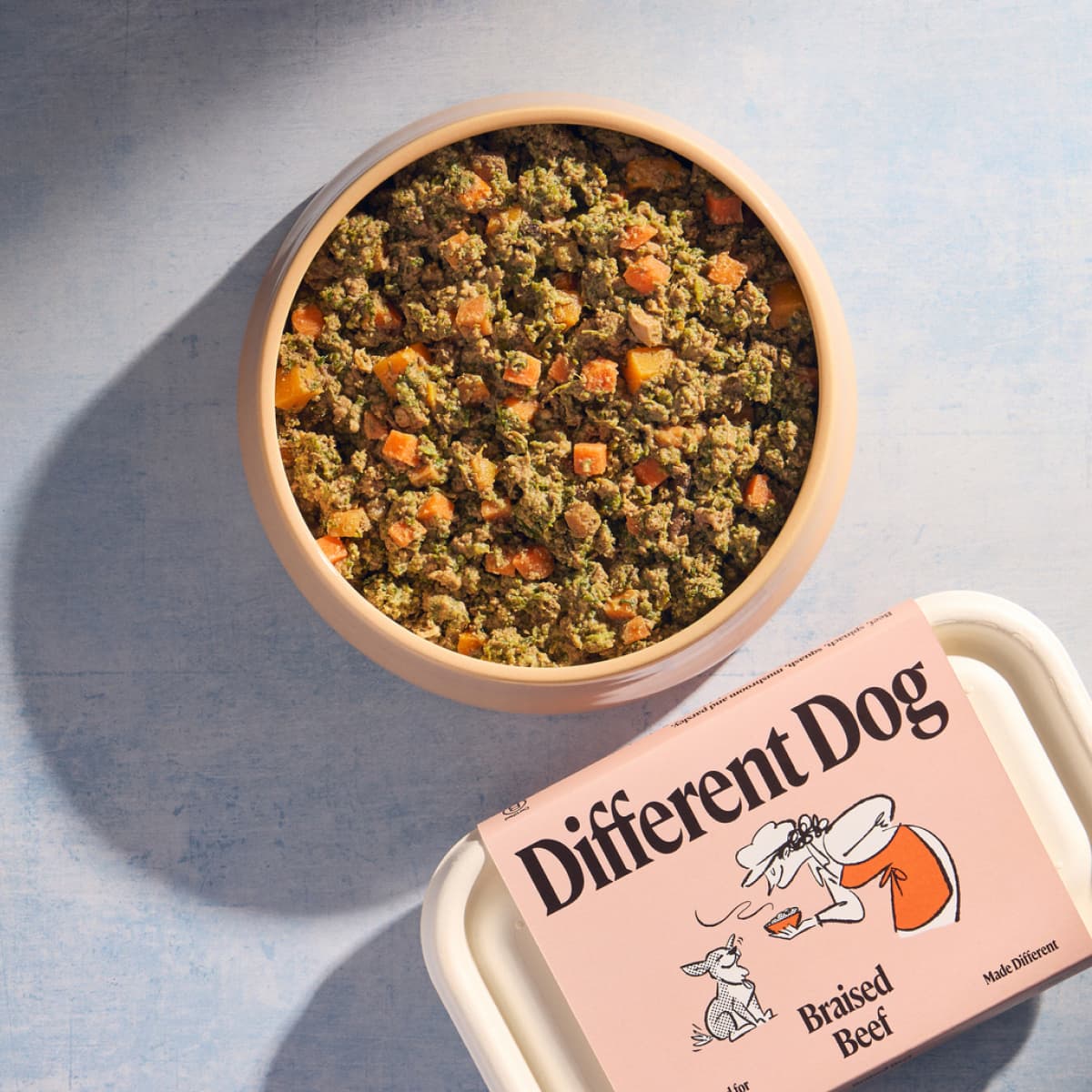
Beef, spinach, squash, mushroom and parsley. Slow-braised, because good things really do take time.